Partner Intelligence Journal | Issue #1

The Future of Partner Intelligence

Why better visibility will shape the next generation of partner ecosystems

By Dina Moskowitz, Founder and CEO, PartnerOptimizer

For years, partner organizations have focused on many of the right priorities: recruiting new partners, enabling existing ones, investing in co-marketing, expanding marketplaces, and building stronger co-selling motions. Those investments have helped create some of the most successful growth engines in B2B technology.

At the same time, partner ecosystems have changed dramatically. Partners launch AI practices, expand into new industries, acquire companies, enter new regions, earn certifications, hire experienced leaders, and build entirely new capabilities. Every one of those changes can affect partner fit, growth potential, and strategic value.

The challenge is that many organizations still make important partner decisions using information that no longer reflects today’s ecosystem. That creates a practical question for every partner leader:

How can we expect to optimize a partner ecosystem that we cannot clearly see?

I believe visibility is becoming one of the defining challenges for modern partner organizations. Better partner decisions begin with a better understanding of the companies already inside the ecosystem and the broader market around them.

Partner Data Ages Faster Than Most Organizations Realize

CRM platforms, PRMs, spreadsheets, directories, and internal reports each play an important role. They help teams capture relationships, document activities, and organize known information. Yet the partner companies represented in those systems continue to evolve between updates.

Consider how much can change inside one company over twelve months. A regional MSP may expand nationally. A systems integrator may launch an AI consulting practice. An ISV may earn new certifications or enter a new vertical. A cybersecurity firm may acquire another business and gain an entirely new customer base.

Each change can materially alter that company’s value within a partner strategy. The partner landscape keeps moving whether the data does or not.
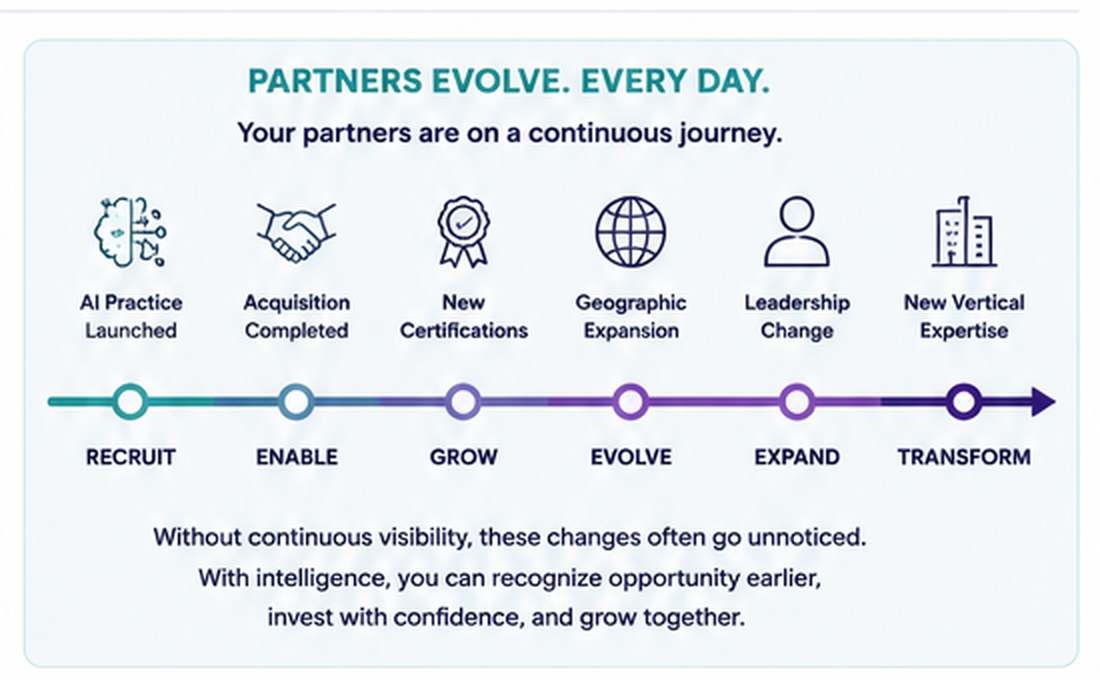
Partner evolution journey from recruit and enable through growth, expansion, and transformation
Partners continually develop new capabilities, market positions, customer relationships, and areas of expertise.

What Partner Intelligence Should Help Leaders Do

Useful partner intelligence turns fragmented ecosystem signals into a clearer basis for action. It helps leaders understand which companies matter, why they matter, how they are changing, and where new opportunity may be forming.

See the ecosystem more clearly

Leaders need visibility into what partners sell, which customers and industries they serve, where they operate, which technologies they support, and how their focus is changing.

Prioritize with greater confidence

Current intelligence helps teams decide which partners to activate, nurture, re-engage, monitor, or deprioritize based on relevant signals rather than familiarity alone.

Recognize growth signals earlier

New practices, customer proof, certifications, acquisitions, leadership changes, and geographic expansion can signal that a partner is becoming more strategically important.

Match investment to readiness

Partner marketing, enablement, MDF, events, and field engagement produce stronger results when they are directed toward partners with the alignment and readiness to act.

Building the Intelligent Partner Organization

The next generation of partner organizations will treat ecosystem visibility as an ongoing strategic capability. Teams will monitor meaningful changes, refresh their understanding of partner fit, and use that intelligence to guide recruitment, activation, segmentation, investment, and competitive strategy.
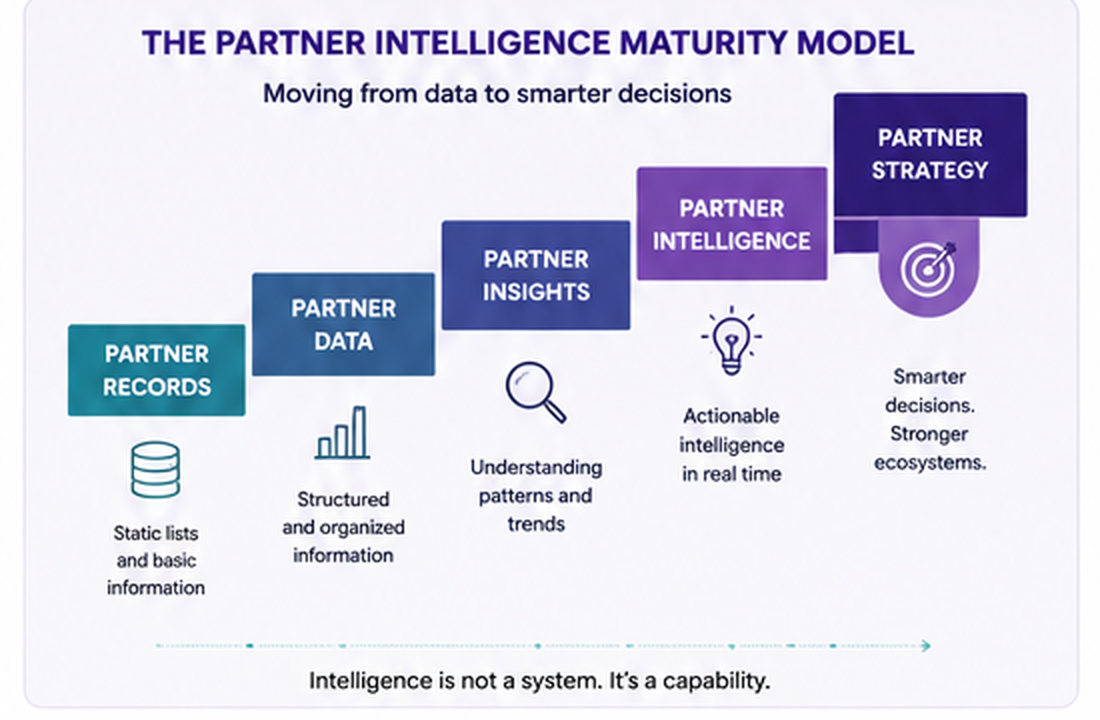
Partner Intelligence Maturity Model progressing from partner records to partner strategy
The Partner Intelligence Maturity Model shows the progression from static records to smarter ecosystem decisions.

This approach creates stronger alignment across the organization. Partner leaders can explain why certain companies deserve attention. Marketing can design more targeted programs. Sales can focus on partners with relevant customers and capabilities. Executives can make ecosystem investments with a clearer understanding of the opportunity.

The organizations that build the strongest partner ecosystems over the next decade will be those that understand their partners most deeply, recognize meaningful change earlier, and consistently translate that understanding into action.

Partner ecosystems have become too dynamic to manage through occasional snapshots alone. As partner leaders, we have an opportunity to see our ecosystems more clearly, invest more intelligently, and create stronger growth for our companies and partners.

The Partner Intelligence Gap

Every organization has the partner ecosystem that exists today and the version of that ecosystem represented in its systems, reports, and internal assumptions. Those two versions are rarely identical.

The Partner Intelligence Gap is the distance between what is currently true about a partner ecosystem and what the organization understands about it.
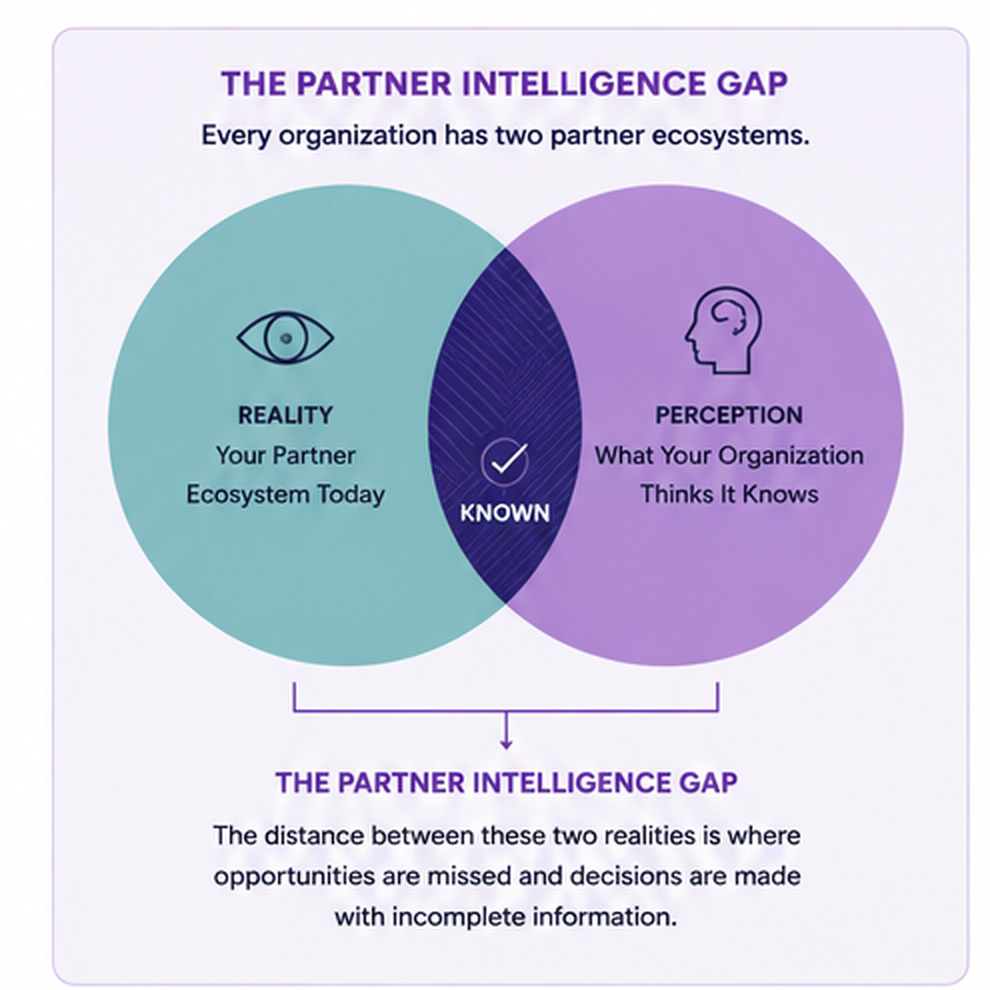
The Partner Intelligence Gap framework showing the difference between ecosystem reality and organizational understanding
The Partner Intelligence Gap is the distance between today’s ecosystem reality and an organization’s current understanding of it.

As that gap grows, it becomes harder to decide where to invest time, MDF, executive attention, enablement, co-selling resources, and field support. Some partners may have become far more valuable since they were first recruited. Others may have shifted focus, changed ownership, entered new markets, or moved away from the organization’s current priorities.

These changes often happen quietly. When the underlying intelligence is incomplete or stale, the opportunity can remain hidden until a competitor acts first or a customer need exposes the gap.

The Largest Growth Opportunity May Already Exist

When partner organizations discuss growth, recruiting new partners is often the first priority. Recruiting will always matter, especially when a company is entering a new geography, market, solution area, or customer segment. Still, many organizations have significant opportunity sitting inside their existing partner base.

Existing partners continue to develop new capabilities, strengthen technical expertise, enter adjacent markets, and build new customer relationships. Some become significantly better aligned with the business than they were when they first signed an agreement.

If those changes are not visible, those opportunities remain invisible as well. That can lead to highly aligned partners receiving too little engagement while familiar but poorly aligned partners continue to receive disproportionate attention and resources.

If you were recruiting each of your existing partners today, knowing everything they have become since you first signed them, which ones would you recruit again?

The answer can reveal where to re-engage, where to deepen investment, and where the current strategy may still be anchored to an older view of the ecosystem.

Five Questions Every Partner Leader Should Be Asking

A more current view of the ecosystem begins with better questions. These five are a useful place to start:

  1. Which partners have become more strategically aligned during the past year?
  2. Which partners have developed capabilities that we have not yet recognized?
  3. Where are we investing resources based on outdated assumptions?
  4. Which partners deserve renewed executive attention?
  5. Where are the strongest growth opportunities already hiding inside our ecosystem?

The purpose of these questions is to help teams direct action toward the partners and opportunities most likely to produce meaningful results.

Partner Intelligence FAQs

What is partner intelligence?

Partner intelligence is the structured, current understanding of partner companies and ecosystems that helps organizations identify fit, monitor change, prioritize investment, and make better partner revenue decisions.

Why does partner intelligence matter?

Partner capabilities, markets, leadership, technology focus, and customer relationships change over time. Current intelligence helps partner teams avoid outdated assumptions and recognize high-value opportunities earlier.

What is the Partner Intelligence Gap?

The Partner Intelligence Gap is the distance between what is currently true about a partner ecosystem and what an organization understands about it through its systems, reports, and internal knowledge.

How can companies use partner intelligence?

Companies can use partner intelligence to discover and qualify partners, segment existing ecosystems, prioritize engagement, identify growth signals, improve data governance, analyze competitors, and guide partner investment.

What would better visibility reveal about your ecosystem?

PartnerOptimizer helps B2B technology companies understand existing partners, define and discover ideal partners, analyze broader partner markets, and direct resources toward the opportunities with the greatest potential.

Request an Ecosystem Strategy Review